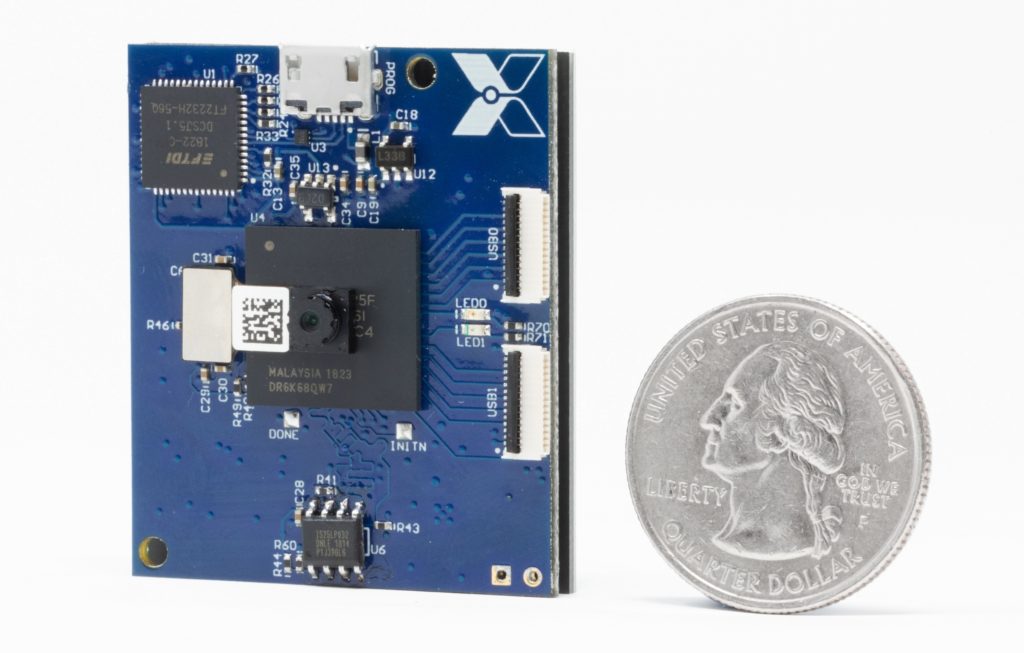

“If AI is so easy, why isn’t there any in this room?” asks Ali Farhadi, founder and CEO of Xnor, gesturing around the conference room overlooking Lake Union in Seattle. And it’s true — despite a handful of displays, phones, and other gadgets, the only things really capable of doing any kind of AI-type work are the phones each of us have set on the table. Yet we are always hearing about how AI is so accessible now, so flexible, so ubiquitous.
And in many cases even those devices that can aren’t employing machine learning techniques themselves, but rather sending data off to the cloud where it can be done more efficiently. Because the processes that make up “AI” are often resource-intensive, sucking up CPU time and battery power.
That’s the problem Xnor aimed to solve, or at least mitigate, when it spun off from the Allen Institute for Artificial Intelligence in 2017. Its breakthrough was to make the execution of deep learning models on edge devices so efficient that a $5 Raspberry Pi Zero could perform state of the art computer vision processes nearly well as a supercomputer.
The team achieved that, and Xnor’s hyper-efficient ML models are now integrated …read more
Source:: TechCrunch Gadgets
 Previous post
 Next post