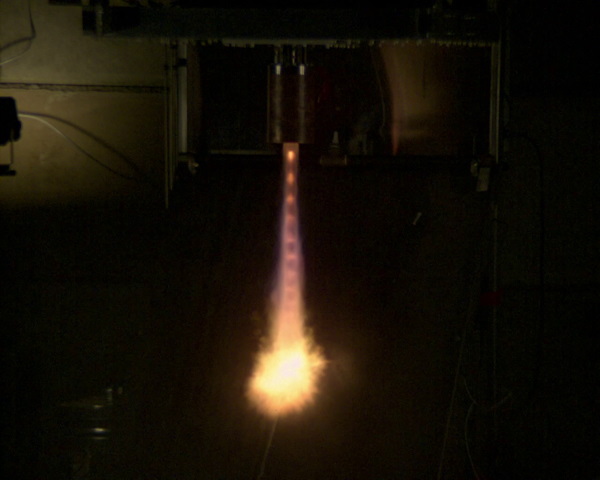
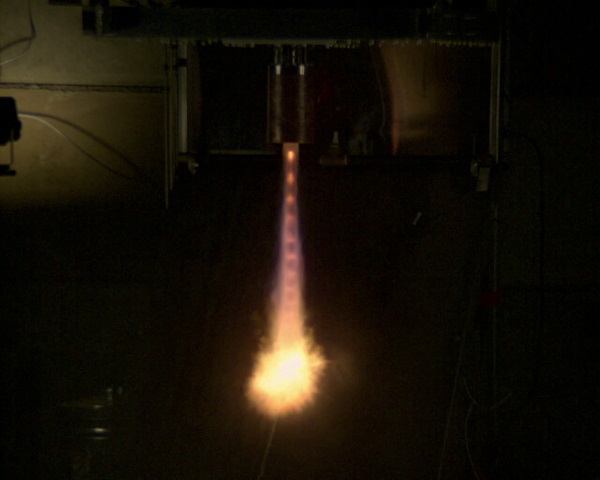
Launch vehicles and their enormous rocket engines tend to receive the lion’s share of attention when it comes to space-related propulsion, but launch only takes you to the edge of space — and space is a big place. Tesseract has engineered a new rocket for spacecraft that’s not only smaller and more efficient, but uses fuel that’s safer for us down here on the surface.
The field of rocket propulsion has been advancing constantly for decades, but once in space there’s considerably less variation. Hydrazine is a simple and powerful nitrogen-hydrogen fuel that’s been in use since the ’50s, and engines using it (or similar “hypergolic” propellants) power many a spacecraft and satellite today.
There’s just one problem: Hydrazine is horribly toxic and corrosive. Handling it must be done in a special facility, using extreme caution and hazmat suits, and very close to launch time — you don’t want a poisonous explosive sitting around any longer than it has to. As launches and spacecraft multiply and costs drop, hydrazine handling remains a serious expense and danger.
Crowdfunded spacecraft LightSail 2 delivers amazing images of its deployed solar sail
<iframe title="“Crowdfunded spacecraft LightSail 2 delivers amazing images of its deployed solar sail” …read more
Source:: TechCrunch Gadgets
 Previous post
 Next post