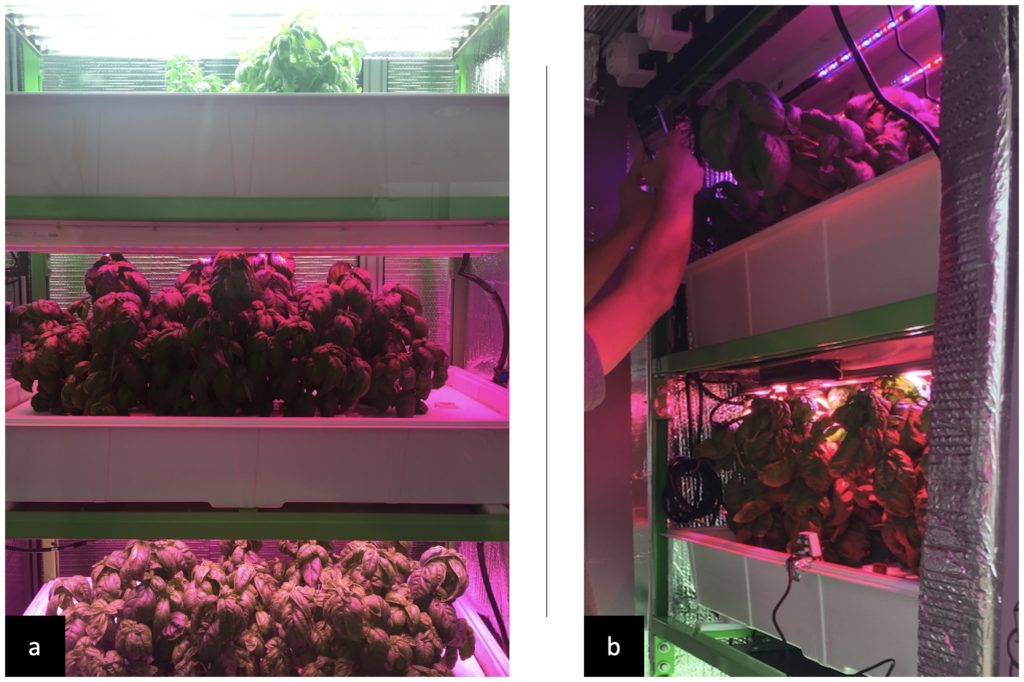
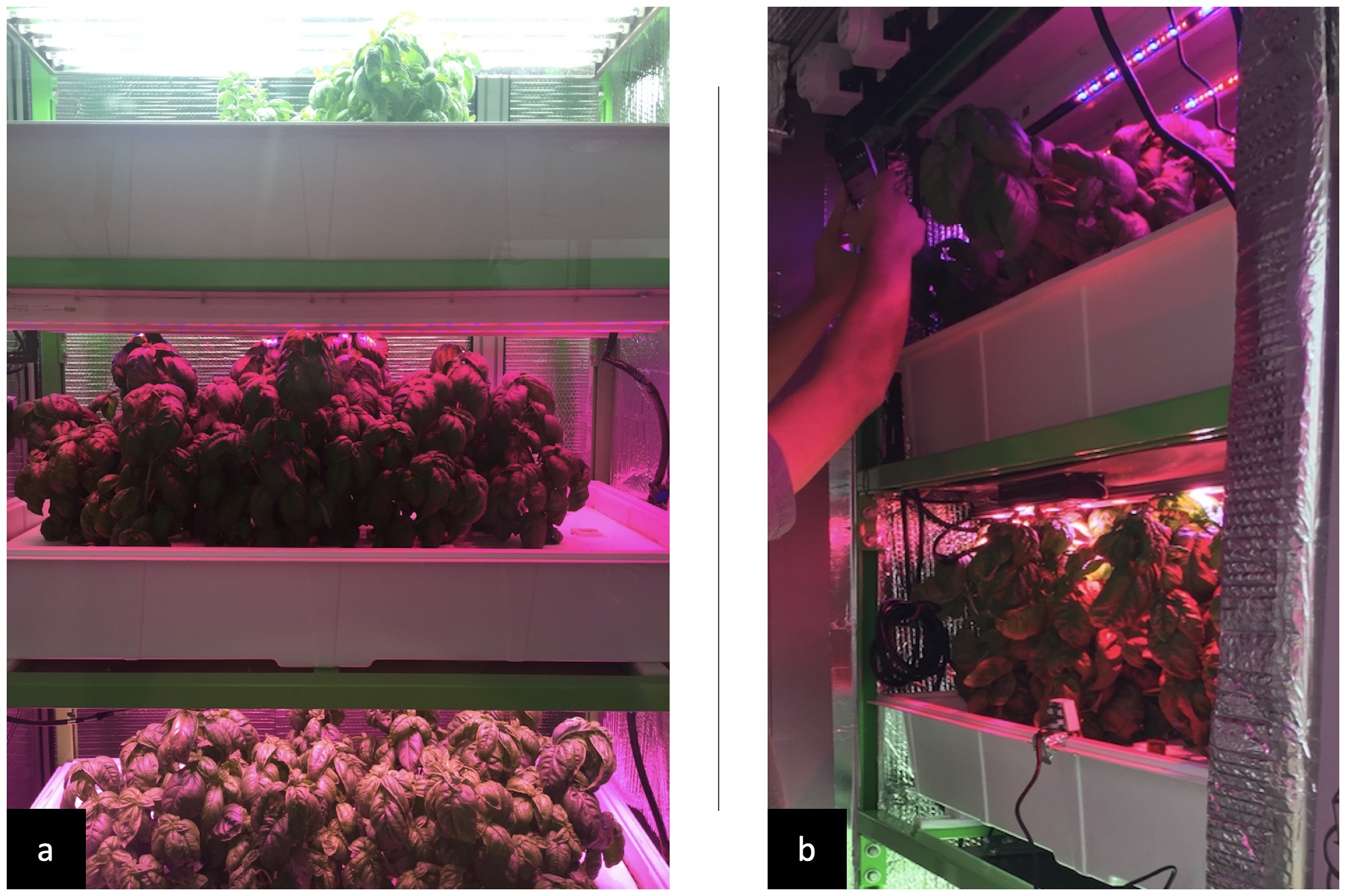
The days when you could simply grow a basil plant from a seed by placing it on your windowsill and watering it regularly are gone — there’s no point now that machine learning-optimized hydroponic “cyber-agriculture” has produced a superior plant with more robust flavors. The future of pesto is here.
This research didn’t come out of a desire to improve sauces, however. It’s a study from MIT’s Media Lab and the University of Texas at Austin aimed at understanding how to both improve and automate farming.
In the study, published today in PLoS One, the question being asked was whether a growing environment could find and execute a growing strategy that resulted in a given goal — in this case, basil with stronger flavors.
Such a task is one with numerous variables to modify — soil type, plant characteristics, watering frequency and volume, lighting, and so on — and a measurable outcome: concentration of flavor-producing molecules. That means it’s a natural fit for a machine learning model, which from that variety of inputs can make a prediction as to which will produce the best output.
“We’re really interested in building networked tools that can take a plant’s experience, its phenotype, the set of …read more
Source:: TechCrunch Gadgets
 Previous post
 Next post